
Broccoli all the way!
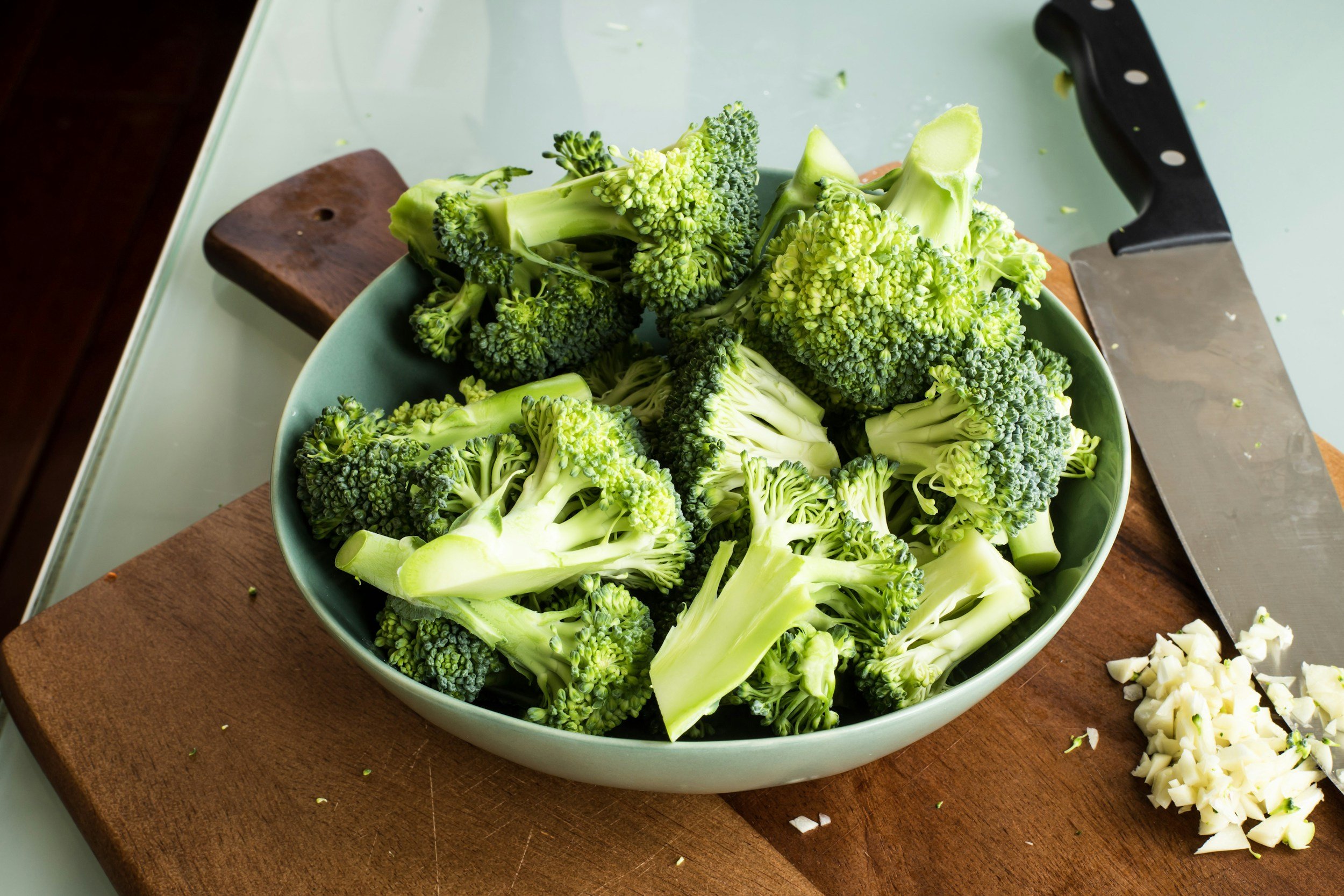
Scroll all the way down for a delicious
broccoli detox soup recipe!
by Jill Aida Horn, MPH
Broccoli is one of the most clinically supported therapeutic vegetables in modern nutrition science. Earthy, slightly bitter, and deeply nourishing, it delivers a powerful combination of fiber, sulfur-containing compounds, vitamins, minerals, and polyphenols that support metabolic health, detoxification, hormone balance, vascular integrity, and gut–brain communication. Its deep green color reflects chlorophyll, carotenoids, and glucosinolates that activate protective cellular pathways, support gut health, and help regulate inflammation. Often underestimated or overcooked, broccoli is in fact a cornerstone vegetable in evidence-based, longevity- and hormone-supportive nutrition.
A Low-Glycemic, Fiber-Rich Vegetable for Metabolic Stability
Broccoli provides a substantial amount of fiber with minimal carbohydrate load. This combination slows gastric emptying, stabilizes post-meal glucose responses, and supports insulin sensitivity—key components of metabolic resilience and hormonal balance.
Large-scale prospective analyses and systematic reviews in The American Journal of Clinical Nutrition and Diabetes Care consistently demonstrate that higher intake of non-starchy vegetables is associated with improved glycemic control, lower HbA1c, and reduced cardiometabolic risk. One cup of cooked broccoli provides approximately 5 grams of fiber with a very low glycemic load, making it an ideal stabilizing food during heavier meals or periods of dietary fluctuation.
Glucosinolates, Sulforaphane & Anti-Inflammatory Signaling
Broccoli’s defining feature is its glucosinolate content, particularly glucoraphanin, which is converted into sulforaphane when broccoli is chopped or lightly cooked. Sulforaphane is one of the most extensively studied dietary phytochemicals for activating phase II detoxification enzymes, enhancing antioxidant defenses, and modulating inflammatory signaling.
Recent mechanistic and human studies published in Nature Food, Advances in Nutrition, and Nutrition Reviews show that sulforaphane-rich foods support hepatic detoxification capacity, reduce oxidative stress, and improve markers of cardiometabolic and inflammatory health. These effects are especially relevant during periods of increased environmental, dietary, or psychological stress.
Hormone Balance, Vascular Health & Micronutrient Density
Broccoli is rich in vitamin C, vitamin K1, folate, potassium, magnesium, and bioavailable calcium, as well as indole-3-carbinol, a compound that supports healthy estrogen metabolism by promoting favorable estrogen breakdown pathways in the liver.
High-quality cohort studies in Circulation and The Journal of Nutrition link higher cruciferous vegetable intake to improved endothelial function, reduced arterial stiffness, and lower cardiovascular disease risk. For women in particular, broccoli offers bone-protective and hormone-supportive nutrition without inflammatory or glycemic burden.
Gut Health & Nervous System Regulation
The fermentable fibers and polyphenols in broccoli support the production of short-chain fatty acids, particularly butyrate, which strengthens gut barrier integrity and regulates immune signaling. These microbial metabolites also influence vagal tone, stress resilience, and neuroinflammatory pathways.
Recent reviews in Nature Reviews Gastroenterology & Hepatology and Cell Host & Microbe highlight how cruciferous vegetables shape microbial diversity and contribute to gut–brain communication. When prepared gently, broccoli is broadly tolerated, deeply nourishing, and supportive of both digestive and nervous system health.
Final Bite: Broccoli is a true therapeutic vegetable—supporting detoxification, metabolic stability, hormone balance, vascular health, and gut–brain signaling in one simple food. Lightly cooked to preserve sulforaphane and fiber, it is a grounding, protective addition to meals during busy or high-stress seasons.
Below is a warm, elegant way to enjoy it.
Recipe of the Week
Creamy Broccoli Detox Soup
comforting • mineral-rich • gut-supportive • winter-ready

Ingredients
1 tbsp olive oil
1 small yellow onion, chopped
2 cloves garlic, minced
4–5 cups broccoli florets and tender stems, chopped
1 small potato or ½ cup cauliflower (for natural creaminess)
4 cups low-sodium vegetable broth
½ tsp sea salt, or to taste
Fresh black pepper
Optional: squeeze of lemon, drizzle of olive oil, pinch of red pepper flakes
Instructions
Heat olive oil in a pot over medium heat. Add onion and garlic and sauté gently until soft and fragrant, about 3–4 minutes.
Add broccoli, potato or cauliflower, broth, salt, and pepper. Bring to a boil, then reduce to a simmer and cook until vegetables are tender, about 12–15 minutes.
Blend until smooth using an immersion blender or blender in batches.
Finish with lemon juice or olive oil if desired. Serve warm.
Perfect as a grounding lunch, light dinner, or nourishing reset meal.
References
Boeing H, et al. “Vegetables and Cardiometabolic Health.” The American Journal of Clinical Nutrition.
Schwingshackl L, et al. “Dietary Fiber Intake and Risk of Type 2 Diabetes.” Diabetes Care.
Zhang Y, et al. “Sulforaphane and Human Health.” Advances in Nutrition.
Fahey JW, et al. “Broccoli Sprouts and Sulforaphane Biology.” Nutrition Reviews.
Bondonno NP, et al. “Cruciferous Vegetables and Vascular Health.” Circulation.
McRae MP. “Vitamin K and Cardiovascular Outcomes.” The Journal of Nutrition.
Cryan JF, et al. “The Microbiota–Gut–Brain Axis.” Nature Reviews Gastroenterology & Hepatology.
