
Have you heard of semolina?

Scroll to the bottom for a delicious,
holiday-ready vegan lasagna recipe.
by Jill Aida Horn, MPH
Semolina wheat—most commonly consumed as pasta, couscous, and traditional Italian durum products—is often misunderstood in modern nutrition. When consumed in its minimally refined, high-protein durum form, semolina represents one of the most metabolically stable grain options available. Rich in slowly digestible starch, protein, B-vitamins, minerals, and bioactive phytochemicals, semolina wheat supports glycemic control, gut health, and cardiometabolic resilience—particularly when paired with fiber-rich vegetables and healthy fats¹⁻⁴.
Rather than behaving like a “refined carb,” high-quality semolina products consistently demonstrate favorable metabolic effects in both mechanistic and clinical research²,³.
1. A Slowly Digestible Grain for Glycemic Stability
Durum wheat semolina has a uniquely compact starch–protein matrix that slows enzymatic digestion, resulting in a lower post-prandial glycemic response compared to many other wheat products and refined grains². Pasta made from semolina consistently shows a low to moderate glycemic index, even when consumed as part of mixed meals¹,³.
Large randomized controlled trials and meta-analyses published in The American Journal of Clinical Nutrition and BMJdemonstrate that pasta and semolina-based products do not worsen glycemic control and are associated with improved post-meal glucose regulation and insulin sensitivity²,³. This makes semolina a valuable carbohydrate source for metabolic health, hormonal balance, and sustained energy without glucose volatility.
2. Protein, Micronutrients & Satiety Signaling
Semolina wheat is naturally higher in protein than most wheat flours and provides meaningful amounts of magnesium, iron, selenium, zinc, and B-vitamins—nutrients essential for mitochondrial function, nervous system health, and red blood cell production⁴,⁵.
High-impact reviews in Nutrients and The Journal of Nutrition show that higher-protein grain products enhance satiety signaling through hormones such as GLP-1 and PYY, reduce spontaneous energy intake, and support long-term weight stability⁵. When paired with fat and fiber, semolina contributes to prolonged satiety and steady energy rather than rapid hunger rebound.
3. Gut Microbiome & Fermentation Benefits
Despite common misconceptions, wheat-derived fibers and polyphenols can positively shape the gut microbiome. Semolina contains arabinoxylans and phenolic compounds that serve as substrates for beneficial bacteria, promoting short-chain fatty acid production—particularly butyrate⁶.
Human intervention studies and mechanistic reviews in Gut and Nature Reviews Gastroenterology & Hepatologydemonstrate that whole-grain wheat consumption increases microbial diversity, strengthens gut barrier integrity, and reduces low-grade systemic inflammation⁶,⁷. These microbial shifts directly influence immune regulation, stress physiology, and gut–brain signaling⁷.
4. Cardiometabolic & Longevity Associations
Prospective cohort studies published in BMJ and Circulation consistently link whole-grain wheat intake with reduced risk of cardiovascular disease, stroke, type 2 diabetes, and all-cause mortality¹,⁴. Semolina-based foods—when minimally processed—contribute to these protective associations through improvements in lipid profiles, endothelial function, and insulin sensitivity³,⁴.
Within Mediterranean dietary patterns, semolina pasta plays a central role alongside vegetables, olive oil, and legumes—illustrating that grain quality and dietary context matter far more than carbohydrate avoidance¹,³.
Final Bite: High-quality semolina wheat is a slow-burning, protein-rich grain that supports glycemic stability, gut health, and long-term cardiometabolic resilience¹⁻⁵. When paired with vegetables, olive oil, and plant protein, it becomes a really grounding and nourishing carbohydrate choice—especially during festive seasons when deliciousness matters the most.
Recipe of the Week
Vegan High-Protein Semolina Lasagna
cozy • grounding • protein-rich • holiday-ready
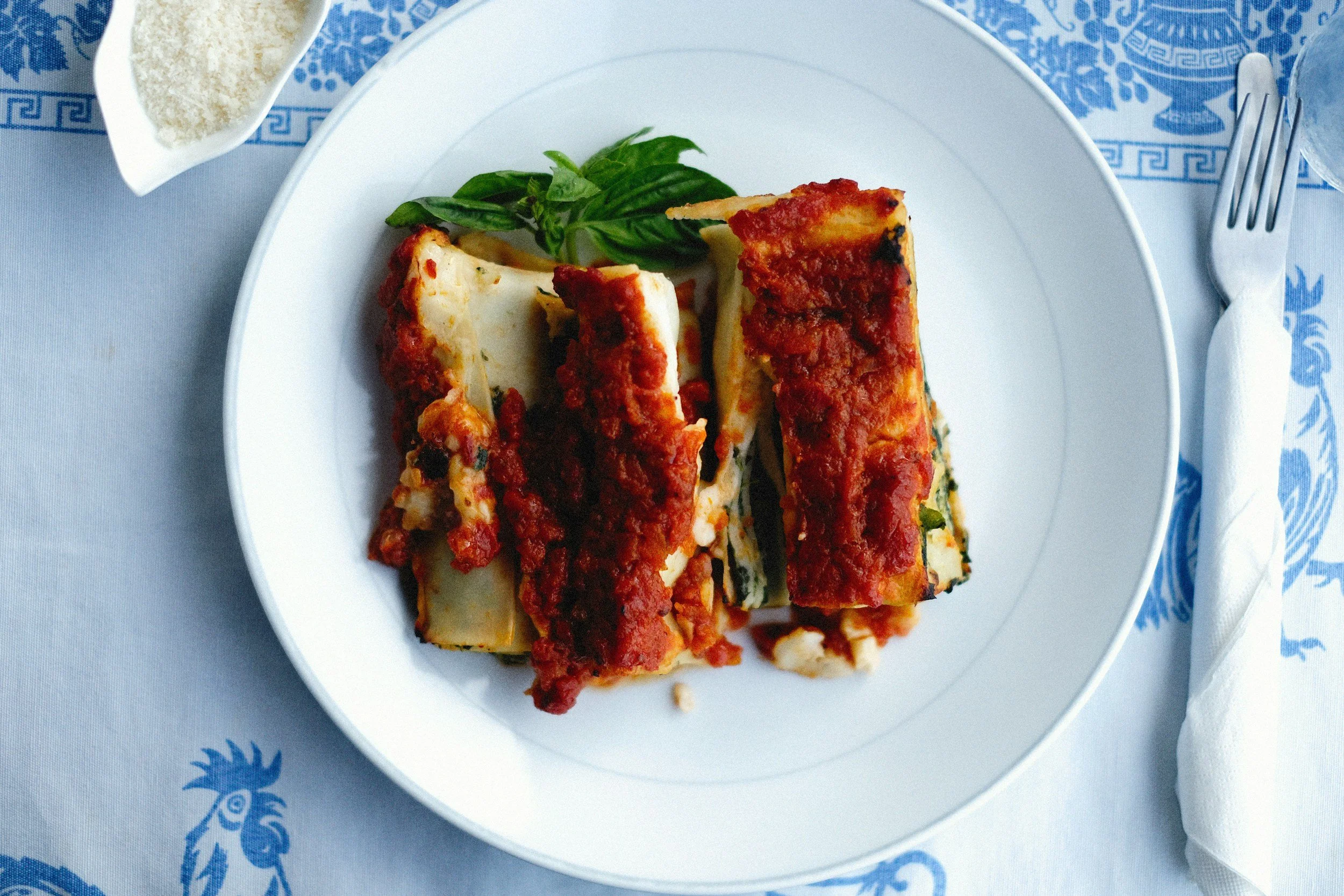
Ingredients
For the soy–vegetable ragù:
2 tbsp olive oil
1 onion, finely chopped
3 cloves garlic, minced
1½ cups soy protein crumbles (TVP or soy mince)
1 cup mushrooms, finely chopped
1 zucchini, grated
1 cup spinach, chopped
2 cups crushed tomatoes
1 tbsp tomato paste
1 tsp dried oregano
1 tsp dried basil
Pinch of nutmeg
Salt & black pepper, to taste
For the cashew béchamel:
1 cup raw cashews, soaked 4 hours
1 cup unsweetened soy milk or almond milk
2 tbsp nutritional yeast
1 tbsp lemon juice
½ tsp sea salt
For assembly:
9–12 semolina lasagna sheets (durum wheat)
Fresh basil or thyme, to finish
Instructions
Preheat oven to 375°F (190°C).
If using dry soy protein (TVP), rehydrate in hot salted water for 5–10 minutes, then drain well.
Heat olive oil in a skillet. Sauté onion until translucent. Add garlic and cook briefly until fragrant.
Add soy protein and mushrooms. Cook until lightly browned and excess moisture evaporates. Stir in zucchini and spinach and cook until just tender.
Add crushed tomatoes, tomato paste, herbs, nutmeg, salt, and pepper. Simmer 15–20 minutes until thick and savory.
Blend all béchamel ingredients until completely smooth and creamy.
Assemble lasagna: spread a thin layer of ragù on the bottom of a baking dish, add semolina sheets, more ragù, then béchamel. Repeat layers, finishing with béchamel on top.
Cover with foil and bake 35 minutes. Remove foil and bake another 10–15 minutes until lightly golden. Rest 10 minutes before slicing.
Serve warm, garnished with fresh herbs.
References:
Reynolds A et al. BMJ. 2019;365:l1688.
Livesey G et al. The American Journal of Clinical Nutrition. 2008;87(1):258S–268S.
Chiavaroli L et al. BMJ. 2018;360:k1149.
Schwingshackl L et al. Circulation. 2017;136(20):1888–1900.
Slavin J. Nutrients. 2013;5(9):3562–3580.
De Angelis M et al. Gut. 2015;64(7):1053–1063.
Cryan JF et al. Nature Reviews Gastroenterology & Hepatology. 2019;16(9):497–513.
