
Who else just loves Persimmons?
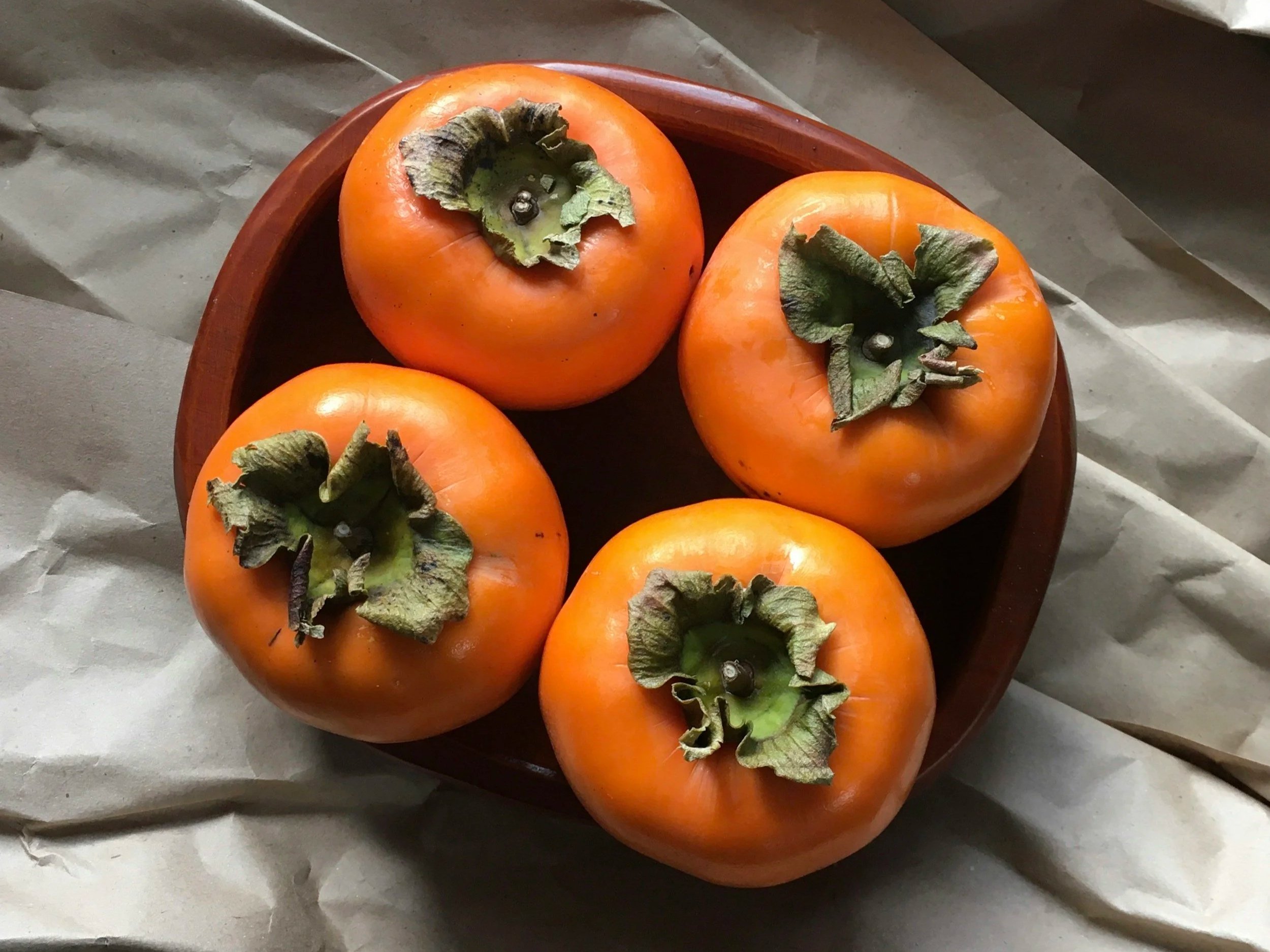
Scroll all the way down for a cozy, polyphenol-rich roasted persimmon & cinnamon bowl.
by Jill Aida Horn, MPH
Persimmons are one of winter’s most elegant and underappreciated fruits. Lush, honey-sweet, and vibrantly orange, they are densely packed with bioactive compounds that support metabolic health, vascular function, oxidative balance, and gut integrity. Their glowing color reflects a high concentration of carotenoids, flavonoids, tannins, and vitamin C—molecules that become especially relevant during colder months, when oxidative stress, immune demand, and dietary heaviness tend to rise. Deeply seasonal and traditionally consumed in East Asian and Mediterranean cultures, persimmons are a true winter therapeutic fruit with growing support in high-impact nutrition science.
A Low-to-Moderate Glycemic Fruit with Exceptional Antioxidant Density
Despite their sweetness, persimmons deliver fiber, polyphenols, and water in a whole-food matrix that slows carbohydrate absorption and tempers post-meal glucose responses. Both astringent (Hachiya) and non-astringent (Fuyu) varieties provide soluble fiber and bioactive tannins that contribute to metabolic stability.
Large human and mechanistic analyses show that diets rich in polyphenol-dense fruits improve insulin sensitivity and reduce oxidative stress markers when consumed in whole form rather than as juices or concentrates (1,2). Persimmons offer sweetness with structural integrity—an important distinction during winter months when refined carbohydrate intake often increases.
Carotenoids, Polyphenols & Inflammation Protection
Persimmons are particularly rich in β-carotene, β-cryptoxanthin, lutein, zeaxanthin, and unique proanthocyanidins. These compounds feed healthy gut microbes which in turn reduce inflammation. They may also neutralize reactive oxygen species, protect lipid membranes, and support endothelial and mitochondrial function.
High-impact reviews and experimental human studies demonstrate that persimmon polyphenols significantly reduce lipid peroxidation, enhance endogenous antioxidant enzyme activity, and protect against LDL oxidation—key mechanisms in cardiometabolic and inflammatory disease prevention (3–5).
Cardiovascular & Lipid-Lowering Effects
One of persimmon’s most clinically compelling features is its effect on cholesterol metabolism. Persimmon fiber and tannins bind bile acids in the gut, promoting their excretion and stimulating hepatic cholesterol clearance.
Controlled human intervention trials and mechanistic studies show that regular persimmon intake is associated with reductions in total cholesterol, LDL cholesterol, and oxidative lipid markers (6,7). These effects are particularly relevant during winter, when saturated fat intake tends to rise and physical activity may decline.
Gut Health, Immune Support & Seasonal Resilience
Persimmons contain fermentable fibers and polyphenols that selectively nourish beneficial gut microbes, increasing the production of short-chain fatty acids such as acetate and butyrate. These microbial metabolites strengthen gut barrier integrity, regulate immune signaling, and help dampen systemic inflammation.
Authoritative reviews highlight how polyphenol-rich fruits enhance microbial diversity and gut–immune cross-talk, with downstream benefits for immune defense and neuroimmune regulation (8,9). Combined with vitamin C and carotenoids, persimmons are uniquely suited to support immune resilience during cold and flu season.
Final Bite: Persimmons are a winter jewel: grounding, sweet, antioxidant-dense, and metabolically supportive. When eaten ripe and in season, they offer a rare combination of pleasure and protection—supporting cardiovascular health, lipid balance, reduction in inflammation, and gut integrity at a time of year when the body benefits most from gentle nourishment.
Below is a simple, warming way to enjoy them.
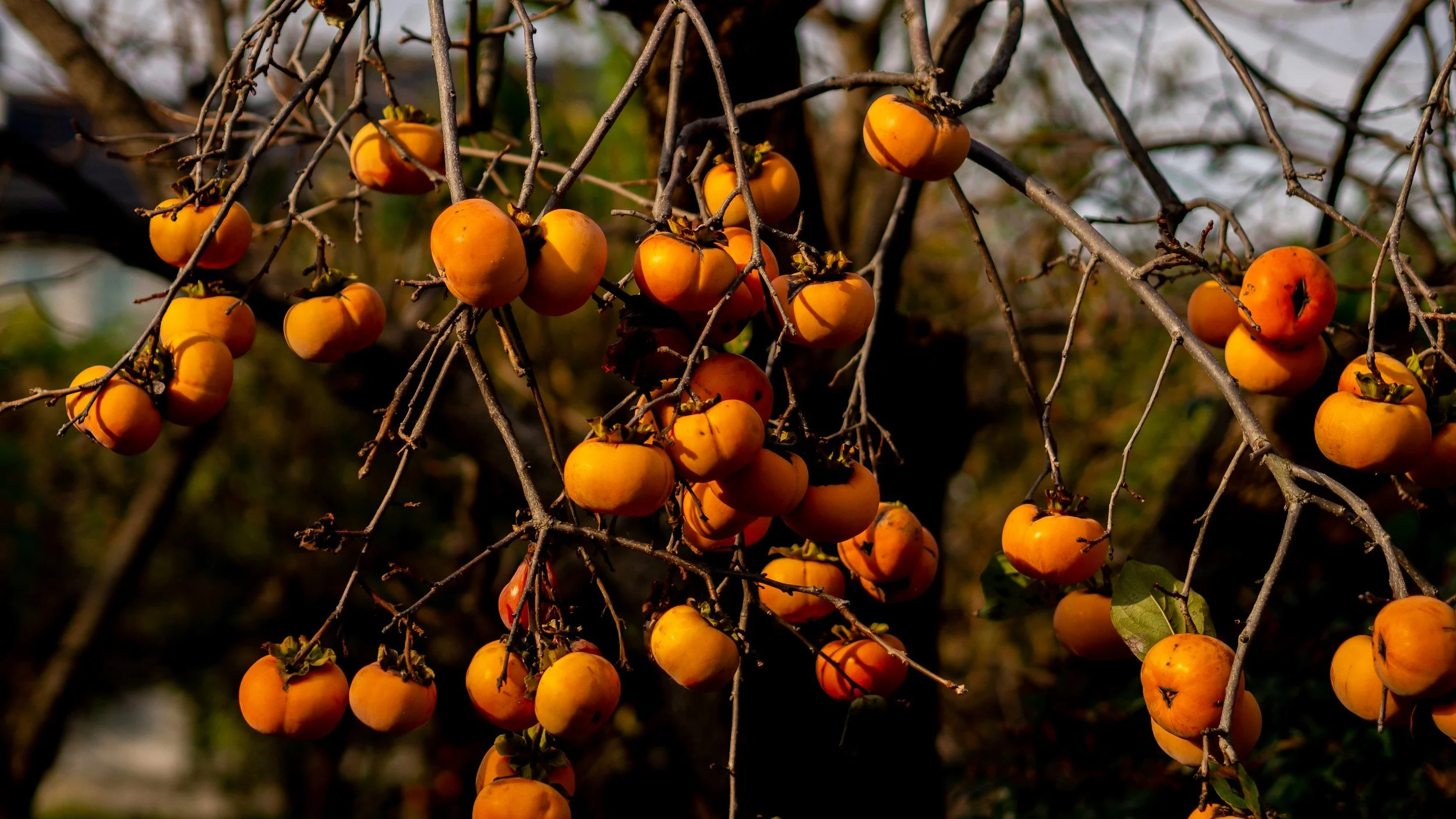
Recipe of the Week
Roasted Persimmons with Cinnamon & Yogurt
winter-cozy • antioxidant-rich • gut-supportive • naturally sweet
Ingredients
2 ripe Fuyu persimmons (or very ripe Hachiya, fully soft)
½ tsp cinnamon
Optional pinch of nutmeg or cardamom
1 tsp olive oil or coconut oil
Greek yogurt or coconut yogurt, for serving
Optional toppings: crushed walnuts, pistachios, drizzle of honey
Instructions
Preheat oven to 375°F (190°C).
Slice persimmons into wedges. Toss gently with oil, cinnamon, and spices.
Arrange on a baking sheet and roast for 15–20 minutes, until soft, caramelized, and fragrant.
Serve warm over yogurt. Add nuts or a light drizzle of honey if desired.
Perfect as a grounding breakfast, nourishing dessert, or evening nervous-system-friendly treat.
References:
Manach C, et al. Polyphenols: food sources and bioavailability. The American Journal of Clinical Nutrition.
Del Rio D, et al. Dietary polyphenols and cardiometabolic health. Food & Function.
Ercisli S, et al. Bioactive compounds and antioxidant capacity of persimmon fruits. Journal of Agricultural and Food Chemistry.
Gorinstein S, et al. Antioxidant properties of persimmons and their contribution to lipid protection. Food Chemistry.
Shahidi F, et al. Proanthocyanidins and human health. Critical Reviews in Food Science and Nutrition.
Suzuki T, et al. Cholesterol-lowering effects of persimmon fiber in humans. The Journal of Nutrition.
Gorinstein S, et al. Persimmon intake improves lipid profiles and reduces oxidative stress. British Journal of Nutrition.
Cryan JF, et al. The microbiota–gut–brain axis. Nature Reviews Gastroenterology & Hepatology.
Rowland I, et al. Gut microbiota functions: metabolism of polyphenols. European Journal of Nutrition.
